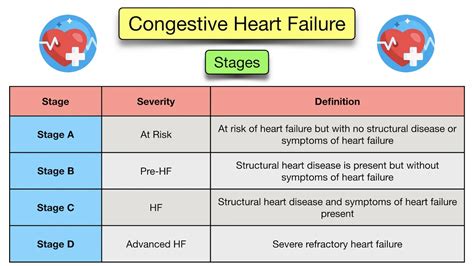
Pre-HF refers to the early stages of the disease, where subtle changes occur before the onset of clinical HF symptoms. Detecting pre-HF can be challenging due to its asymptomatic nature, often leaving patients unaware of their deteriorating cardiac health.
Managing pre heart failure: lifestyle changes that make a difference
Treatment options for pre heart failure patients
Treatment Options for Heart Failure Quick Facts Heart failure symptoms can be treated. People at high risk for heart failure can take steps to lower their risk. A team-based approach is the best way to manage your heart failure.
Pre heart failure: how early detection saves lives
This editorial aims to shed light on pre-HF, emphasizing the importance of early detection, close monitoring, and proactive management to prevent symptomatic HF.
Pre heart failure vs heart failure: key differences explained
Here, we propose 3 categories within the pre-HF stage, encompassing structural abnormalities, heart stress, and subclinical HF. Such a categorization scheme is needed to streamline future studies that may differ in prognosis and management.
Pre heart failure symptoms: what to watch for in daily life
Pre–heart failure (HF) is being recognized as an important stage for recognition of future risk of HF. Identifying individuals who are in a trajectory to develop HF also provides a crucial opportunity for prevention of HF. Pre-HF refers to the early stages of the disease, where subtle changes occur before the onset of clinical HF symptoms. Detecting pre-HF can be challenging due to its.
Understanding pre heart failure: definition and risk factors
Pre-HF refers to the early stages of the disease, where subtle changes occur before the onset of clinical HF symptoms. Detecting pre-HF can be challenging due to its asymptomatic nature, often leaving patients unaware of their deteriorating cardiac health. Participants were categorized based on the presence or absence of HF risk factors and echocardiographic abnormalities. The latter were defined broadly but, importantly, they were viewed in isolation and without advanced echocardiographic techniques such as speckle-tracking strain analysis.